
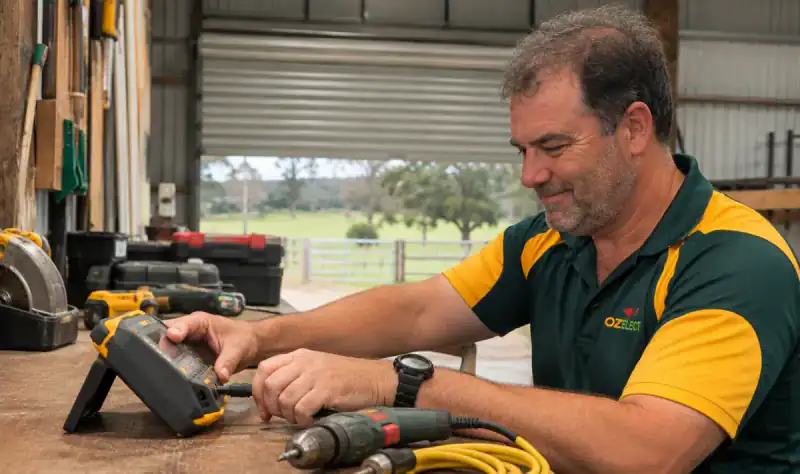
A rental property electrical safety inspection is a walk-through by a licensed electrician. It checks that the wiring and fixed electrical equipment in a tenanted home are safe, and it ends with a written record of anything that needs fixing. Landlords and property managers use it to find faults before a tenant does, and before a fault turns into a fire or a shock.
The short answer
- Who inspects: a licensed electrician, not a property manager with a torch.
- What they check: the switchboard and safety switches, power points, fixed lighting, wet-area and outdoor outlets, and smoke alarms.
- How to book: arrange access with the tenant, send the electrician the property details, and ask for a written defect report. Ozelect covers Moss Vale and the Southern Highlands.
Landlord obligations for electrical safety in NSW rentals
The landlord must keep the rental’s wiring and fixed electrical equipment safe and in reasonable repair for the whole tenancy. That duty doesn’t switch off after the first lease, so a property that passed a check three years ago can still be a problem today.
NSW Fair Trading sets out the current minimum rules, including what applies to safety switches and smoke alarms. Check its pages before each inspection, because the rules can change and this guide is not legal advice.
What the landlord must keep safe and in repair
Fixed means anything wired into the building. That covers the switchboard, circuits and cabling behind the walls, power points, light fittings, exhaust fans and hardwired smoke alarms.
A tenant’s own kettle, lamp or phone charger is a different matter. An inspection looks at the building’s electrical system, and it won’t rule on every appliance a tenant brings in.
What an electrical safety inspection covers in a rental property
If you manage rentals, you want a report you can act on, not a page of electrical jargon. A good electrician works through the property in a set order and records a plain result for each item: pass, defect, or not accessible.
“Not accessible” matters. A locked meter room, a roof space with no safe entry or a switchboard behind stored furniture all end up in the report, and you’ll need a second visit to clear them.
Switchboard and safety switch protection
The switchboard comes first because it tells the electrician most about the rest of the property. The Wiring Rules (AS/NZS 3000) call for safety switch (RCD) protection on power point circuits in new and altered electrical work, so older rentals that haven’t been altered since may lack it.
At the board, the electrician checks:
- Condition: cracked covers, loose panels, rust, moisture or insects inside.
- Labelling: whether each circuit is marked so a tenant or tradesperson can isolate the right one.
- Earthing: that the earth connections are present and secure.
- Heat damage: discolouring, scorching, melted insulation or a burnt smell around breakers and connections.
- Safety switch test: whether each unit trips when its test button is pressed.
Power points, lighting and smoke alarms
From the board, the electrician moves through the rooms. Power points are checked for cracked or loose faceplates, scorch marks, and sockets that grip a plug poorly. Fixed lighting is checked for damaged fittings, and for heat damage from the wrong globes in enclosed fittings.
Wet areas and outdoor outlets get closer attention. Bathrooms, laundries, kitchens, patios and garages mix water with electricity, so damaged or weathered outlets there rank high on the defect list.
Smoke alarms are checked for operation and for age. Each defect goes into the report with its location, so the landlord can see what needs doing and the property manager can book the repair.
Safety switch requirements for rental properties in NSW
Fair Trading is the place to confirm what the current rules require for safety switches in a NSW rental, and a property manager should check it at the time of booking. What an electrician can tell you with certainty is what a safety switch does, and whether the ones in your property work.
What a safety switch does and how to test one
A safety switch (RCD) cuts the power when it detects leakage current, which is electricity escaping along a path it shouldn’t take, such as through a person. Units on power point circuits are commonly rated at 30 mA, and the usual advice is to press the test button about every three months.
A working safety switch trips when you press the button. If it doesn’t, it can no longer protect anyone, and an electrician needs to replace it.
Pressing the button cuts power to the circuits it protects, so warn the tenant first and save any open computer work. Then switch the unit back on.
Tenants can do this test themselves, but the quarterly habit is easy to miss in a rental. The electrician’s test during an inspection is a useful backstop, and the result goes in the report.
Common faults found in rental property electrical inspections
Older rentals throw up the same problems again and again. Most of them come from ageing parts and years of small additions, not from anything a tenant did.
Safety switches and smoke alarms that fail
The first fault is a safety switch that is missing altogether. The second is one that fails the test. A unit that won’t trip needs replacing, and a switchboard upgrade is often the tidier fix if the board is old.
A safety switch that trips repeatedly or won’t reset is a fault to report, because resetting it again and again hides the cause. The cause might be a damaged appliance, water in an outdoor outlet or a failing cable.
Smoke alarms fail in two ways. Some are past their working life, since alarms are generally treated as due for replacement about 10 years after manufacture, with the date usually printed on the unit. Others have flat or removed batteries, often because a tenant got tired of the chirping.
You can check a manufacture date in seconds with the alarm off the ceiling. If it’s missing or unreadable, replace the alarm rather than guess.
Old wiring and overloaded circuits
Wiring in older houses can have degraded insulation, which turns brittle and cracks with age. The signs an electrician looks for are scorch marks at points and switches, loose terminals that run hot, and cabling that doesn’t match the load it now carries.
Overloaded circuits are the other common cause. Modern households run far more devices than the original wiring was designed for, so tenants plug power boards into power boards. The result is warm plugs, nuisance tripping and a real fire risk.
Switchboard and wiring upgrades are the usual fix, and they’re work Ozelect does. They cost more than patching a single point, so an inspection report helps you decide what’s urgent and what can wait.
An inspection finds these faults. It doesn’t repair them on the spot, and it won’t tell you what a full rewire would cost without a separate quote.
When to book a pre-tenancy electrical check
The best time for a pre-tenancy electrical check is once the property is vacant and before the next lease starts. The house is empty, the electrician can reach every room and the switchboard, and repairs are finished before the tenant moves in. A defect found mid-tenancy means arranging access, notice and a disrupted household.
It’s good practice rather than a step every landlord is required to take. You can tie it to the routine gap between tenants, so it becomes part of the changeover.
Repeat the check after any of these:
- major electrical works in the property
- storm damage, especially lightning strikes or water entering the roof or walls
- a long vacancy, when unused circuits can deteriorate or pests can get into the board
A property that sat empty over winter isn’t the same property you listed last year.
Electrical compliance certificates and records for rentals
A certificate of compliance records the electrical work that was done. It doesn’t describe the condition of the whole property, so a certificate for a new power point says nothing about the wiring in the roof.
File each certificate with the inspection report, smoke alarm records and invoices for that property. Keep them digitally, one folder per address, so any of them can be found in a minute when a tenant reports a fault, an insurer asks questions or a property changes hands.
A tidy record also shows what was found, when, and what was done about it. That matters if a dispute ever comes up.
How property managers book an electrician in Moss Vale and the Southern Highlands
Ozelect is a Moss Vale based electrical contracting business serving residential, commercial and industrial clients across the Southern Highlands region of NSW. Property managers can book a Moss Vale electrician for rental inspections across the region, once access has been arranged with the tenant under the Residential Tenancies Act 2010 (NSW).
If you’re new to hiring trades in the area, the local electrician guide for the Southern Highlands is a useful starting point. The page on Ozelect’s Moss Vale electrician services sets out the work the team takes on.
What to have ready before the visit
Access is the usual cause of delays, so sort it out first. A visit can’t go ahead until the tenant has been given proper notice under the tenancy rules, and the electrician can’t test what they can’t reach.
Have this to hand when you call:
- the property address
- access arrangements and the tenant’s notice details
- tenancy dates, including any vacancy window
- known faults or tenant complaints
- earlier certificates and inspection reports
What to ask and what the booking covers
Ask for the electrician’s licence details before you book. The guide on how to choose a licensed electrician in NSW explains what to look for.
Also ask for a written defect report, with a result for each item, and for a certificate for any work carried out. If you also manage strata or multi-unit buildings, Ozelect has a page on electricians for strata properties in Moss Vale.
An inspection booking covers the check and the report. Repairs and upgrades are quoted separately once you’ve seen what the report found.
To book a rental property electrical inspection in Moss Vale or anywhere in the Southern Highlands, contact Ozelect to arrange an inspection.
Frequently asked questions
Who is responsible for electrical safety in a NSW rental property?
The landlord. They must keep the wiring and fixed electrical equipment safe and in reasonable repair for the whole tenancy. NSW Fair Trading publishes the current minimum rules, including those for safety switches and smoke alarms.
How do I know if a safety switch in a rental is working?
Press its test button. A working unit trips and cuts power to the circuits it protects. If it doesn’t trip, or it keeps tripping and won’t reset, an electrician needs to look at it. The usual advice is to test about every three months.
How old is too old for a smoke alarm?
Smoke alarms are generally treated as due for replacement about 10 years after manufacture. The date is usually printed on the unit. If you can’t find a date, replace the alarm rather than guess.
Does a certificate of compliance mean the whole property is electrically safe?
No. It records the electrical work that was done, not the condition of the whole property. Keep it with the inspection report, smoke alarm records and invoices for that address.
Can I get an electrician in while the tenant is still living there?
Yes, once access has been arranged with the tenant under the Residential Tenancies Act 2010 (NSW). Arrange this before the visit, as the electrician can’t test what they can’t reach. A vacant property between leases is easier, because every room and the switchboard are accessible.